Black business · Small business · Startups
Blaze Development Envisions Multi-Use Campus as Part of Maricopa’s Next Chapter of Growth
Proposed four-acre Blaze Ministries campus would combine worship, recreation, business, conventions and community programming as one of Arizona’s fastest-growing cities looks toward its future
The Black Wall Street Economy newsroom · August 19, 2026 · Reporting by The Black Wall Street Economy
In a city where rooftops, roads and new businesses continue to reshape the landscape, Blaze Development is advancing plans for something different: a destination designed not simply to occupy land, but to give people more reasons to live, gather, worship, work, celebrate and spend time in Maricopa.
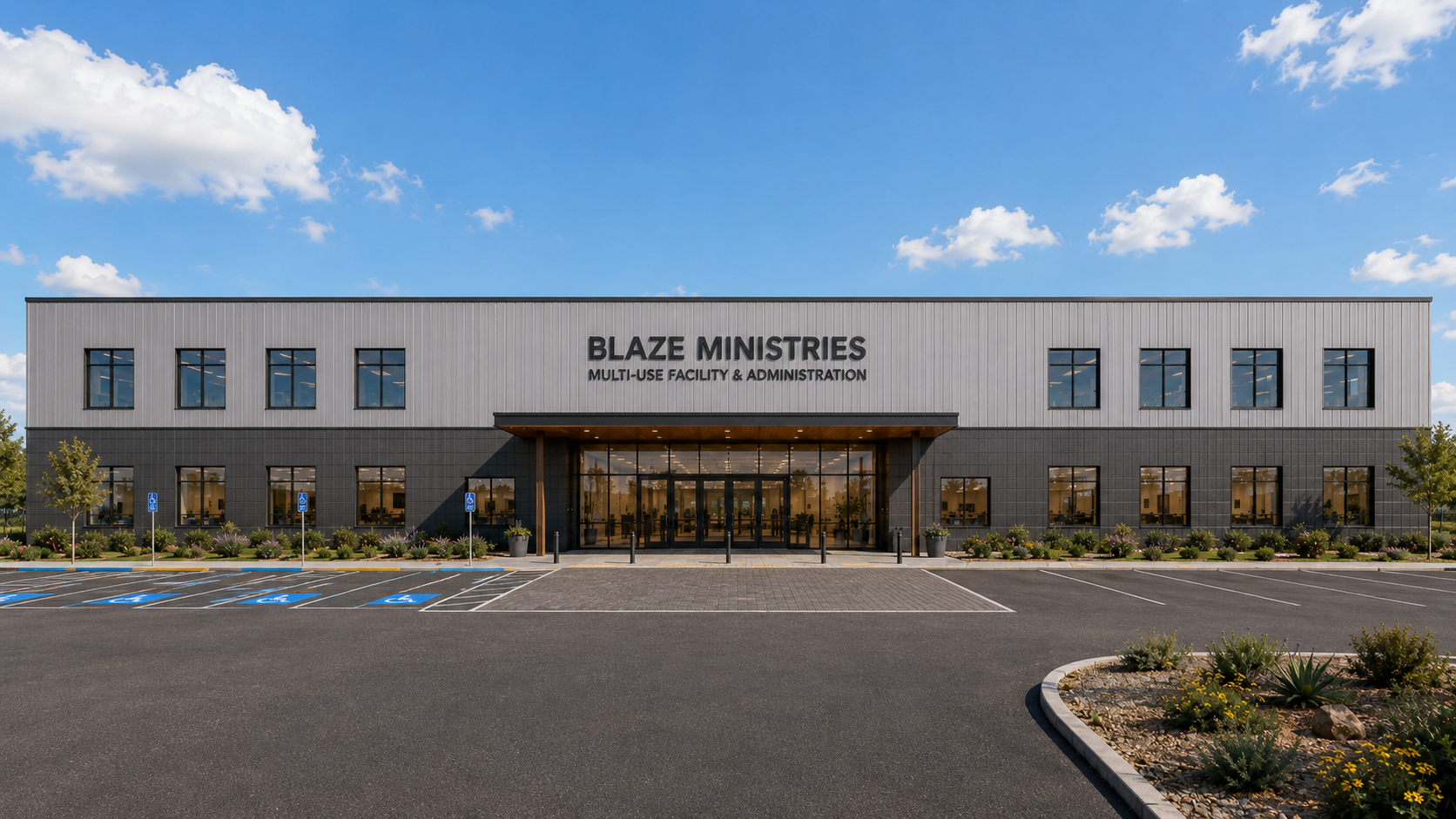
At the center of the company's emerging development strategy is the proposed Blaze Ministries Multi-Use Facility and Administration Campus, a roughly four-acre development planned near West Farrell Road and North White and Parker Road in Maricopa.
The concept brings together uses that are not ordinarily found beneath the same roof — a roller-skating rink, worship center, convention and banquet space, community gathering venue, café, offices, meeting facilities and administrative operations.
That combination is intentional.
Blaze Development describes its broader mission as developing the places where communities "live, connect, create, celebrate and grow." The company says its development pipeline is intended to span recreation, community gathering space, arts and culture, housing and mixed-use projects, with Maricopa and the surrounding Pinal County growth corridor serving as its principal geographic focus.
For a rapidly changing Maricopa, the concept arrives at an important moment.
The U.S. Census Bureau estimated Maricopa's population at 78,362 residents in July 2025, compared with an estimated base of 58,140 in April 2020 — growth of approximately 34.8 percent in five years. The same Census data reflects a city that is increasingly diverse: approximately 45.2 percent of residents are non-Hispanic White, 28.8 percent are Hispanic or Latino, 13 percent are Black, and nearly 19 percent identify with two or more races.
Those numbers help explain why the future of development in Maricopa increasingly involves more than simply constructing homes.
Residents need places to go.
They need entertainment. They need family activities. They need meeting rooms, youth programming, cultural spaces, business opportunities, places of worship and venues capable of supporting everything from a birthday party or community meeting to a convention, banquet or large-scale celebration.
Blaze Development is positioning its project around that broader idea.
One Building, Multiple Communities and Multiple Uses
Architectural planning documents describe a 33,600-square-foot, two-story prefabricated mixed-use facility designed around a large multipurpose first-floor hall. The approximately 20,000-square-foot lower level would be capable of supporting worship services, skating, conventions, conferences, banquets, exhibitions, performances, educational programs and other community activities.
Above it, approximately 13,600 square feet would be dedicated primarily to offices, business functions, administrative operations, meetings and staff activities.
The architectural narrative makes clear that flexibility is one of the project's defining features.
Instead of developing separate buildings that remain unused during significant portions of the week, Blaze's concept attempts to create a facility that can continually change with the people using it.
One evening, families could be skating.
Another day, entrepreneurs or organizations could be holding a conference.
On a weekend, the same space could support worship or ministry programming.
The following week, it could become a banquet hall, exhibition floor, performance venue or community meeting facility.
The main hall is specifically planned as an open multifunctional space capable of functioning as a worship center, roller-skating rink, convention hall, conference facility, banquet and event hall, exhibition space, performance venue and community gathering place.
That adaptability may prove particularly important in a city growing as quickly as Maricopa.
More Than a Church Building
The Blaze Ministries name is a significant part of the development, but the plans portray something much broader than a traditional church campus.
Faith remains part of the foundation. Worship services and ministry activities are specifically incorporated into the architectural program. But the development has also been structured to interact with the wider community.
That distinction matters.
A ministry-driven project can maintain its spiritual identity while still creating a front door wide enough for the entire city.
The proposed facility is designed to accommodate families looking for recreation, young people looking for activities, churches needing gathering space, businesses needing meeting facilities, organizations hosting conferences, residents attending cultural events and entrepreneurs participating in markets, exhibitions and programs.
It represents a model in which ministry is expressed not only through what happens during worship, but through the infrastructure created around people.
For longtime residents and newcomers alike — Black, White, Hispanic, Native American, multiracial and residents from numerous other backgrounds represented across Maricopa — the potential value of such a facility is less about assigning the development to one demographic and more about creating a place where those demographics can actually encounter one another.
That does not require stripping the project of its cultural character.
Urban culture, gospel, contemporary worship, skating culture, live music, youth events, spoken word, entrepreneurship and community celebrations can exist alongside corporate meetings, family gatherings, civic programs and regional conventions.
A truly diverse development does not have to become culturally anonymous in order to become welcoming.
Bringing Back the Roller Rink as Community Infrastructure
Perhaps one of the project's most distinctive features is its proposed skating component.
For generations, roller rinks have occupied a unique place in American community life, particularly within urban communities. They have served simultaneously as recreation centers, music venues, social spaces, youth gathering places and multigenerational cultural institutions.
Blaze appears interested in carrying some of that tradition into a growing suburban Arizona market.
Its website describes the planned Blaze Skating Rink as a year-round family recreation destination offering public skating, family sessions, birthday parties, youth programming, school and church outings, private rentals and community events.
The architectural design goes even further.
The floor is being contemplated for heavy multipurpose use including skating, portable staging, chairs and tables, trade-show booths, temporary partitions, audiovisual equipment, worship seating and banquet configurations. Designers are being instructed to evaluate a dedicated or replaceable skating surface if roller skating becomes a primary use.
That means the rink is not merely being envisioned as entertainment.
It is part of a larger economic and social strategy.
A family that comes to Maricopa to skate may also eat locally, purchase gasoline, visit another business or return for another event. A convention attracts vendors. A wedding hires caterers. A performance employs technicians. A youth event brings parents. An entrepreneurship market gives small businesses a place to reach customers.
One building can create multiple layers of economic activity.
A City Asking for More Places to Stay, Work and Play
Maricopa itself is confronting many of the same questions that Blaze Development says it wants to address.
The city's proposed Advancing Maricopa General Plan, approved by the City Council in June 2026 and scheduled to go before voters in November, is intended to guide development for the next decade and beyond. During the public planning process, residents repeatedly identified priorities that included more local career-oriented jobs, recreation and entertainment, shopping and dining, healthcare services and community programs.
The city's economic-development leadership has similarly emphasized the goal of creating a more self-sustaining economy where residents can increasingly live, work, stay and play without having to leave Maricopa for basic opportunities and experiences.
That is where private projects such as Blaze's proposal could become part of a much larger story.
No individual development solves the needs of a growing city.
But developments that combine local employment, entertainment, family activity, meeting facilities and community programming can reduce some of the pressure created when residential population grows faster than local amenities.
Business Upstairs, Community Downstairs
The second floor also reveals another dimension of the project.
It is not envisioned merely as back-office space for a church.
Current plans include approximately 14 private offices, two large collaborative work areas, a roughly 1,000-square-foot conference room, a dedicated boardroom, administrative space, a staff lounge, an IT and server room and additional meeting and circulation areas. That configuration creates the potential for the campus to function as an organizational and professional hub in addition to an entertainment and ministry destination.
Blaze Development's website describes the company's philosophy as connecting housing, recreation, culture and commerce rather than treating each as an isolated category. It says projects are evaluated based on whether they can produce durable value for residents, development partners and the long-term health of Maricopa.
That philosophy is also reflected in the company's longer-term pipeline.
Blaze says its development interests include residential projects, community and event venues, arts and cultural facilities, recreation destinations, mixed-use development, land opportunities, joint ventures and adaptive-reuse projects.
In other words, the four-acre campus appears intended to be a beginning rather than the end of the company's development ambitions.
Arts, Culture and Entrepreneurship
Another piece of Blaze's strategy involves cultural development.
The company says future programming could incorporate performing arts, dance, theater, spoken word, visual arts, concerts, youth arts programs, workshops, education, artist development, pop-up markets and creative entrepreneurship.
That component could be particularly meaningful as Maricopa grows.
Housing establishes population.
Culture establishes identity.
The strongest cities eventually need both.
A growing community made up of people arriving from different neighborhoods, states, racial backgrounds, generations and traditions needs shared spaces where a local identity can develop.
Arts, entertainment, recreation and community events are some of the ways that happens.
And culturally relevant programming can coexist with broad accessibility. A gospel concert does not have to be attended only by Black residents. A country or contemporary Christian program does not belong only to White residents. Hispanic cultural programming, youth dance, skating nights, comedy, theater, business expos and neighborhood events can all occupy the same calendar.
The facility's strength may ultimately come from that ability to change audiences without losing its identity.
Designed for Permanence
Although the proposed structure relies heavily on prefabricated construction, its architectural narrative repeatedly emphasizes that the finished building should not resemble a temporary structure or industrial warehouse.
The project calls for architectural metal panels, commercial storefront glass, a defined entrance, contemporary window systems, landscaping, exterior lighting and a commercial/civic appearance.
The design brief says the completed project should communicate permanence, modernity, flexibility, civic presence, professionalism, accessibility, community use, worship use and commercial-quality design.
The conceptual campus also includes approximately 300 surface parking spaces, accessible parking, a covered passenger arrival area, two vehicular access points, fire circulation, landscaping and stormwater-management infrastructure.
That scale makes the proposal more than a neighborhood building.
It is being designed as a destination.
Still a Development Project — Not Yet a Finished Building
There is an important distinction between vision and construction.
The plans remain conceptual.
The architectural document explicitly states that its projections, assumptions and conclusions are preliminary and subject to independent verification and professional due diligence.
A number of issues still require reconciliation before construction documents can be completed, including final building dimensions, structural layouts, restroom requirements, parking calculations, site setbacks, utility connections, occupancy requirements, fire and life-safety engineering and other technical details.
The project's website currently identifies the campus as "Under Development."
The location has been identified, the architectural vision has been developed and the project program is taking shape, but those steps should not be confused with final municipal approval, financing, permitting or construction completion.
That distinction will become increasingly important as the proposal advances.
Development With an Urban Pulse and a Broad Invitation
There is also a larger cultural story developing around Blaze.
Historically, projects rooted in Black churches and urban communities have often served functions far beyond Sunday worship. Churches have housed education programs, business meetings, political discussions, youth activities, food programs, arts, entrepreneurship and community organizing.
The Blaze concept carries elements of that legacy without restricting the development to one community.
Its challenge — and perhaps its opportunity — is to preserve the energy and cultural authenticity that makes the vision distinctive while ensuring that a White family relocating from the Midwest, a Black family from metropolitan Phoenix, a Hispanic entrepreneur from elsewhere in Arizona, a young multiracial household buying its first home or a longtime Maricopa resident can all walk through the doors and understand that there is something there for them.
That is an urban vision in the broadest sense of the word.
Not division.
Density of activity.
Music.
Commerce.
Faith.
Recreation.
Culture.
Food.
Entrepreneurship.
Families.
And people sharing the same place for different reasons.
What Blaze Could Bring to Maricopa
If ultimately financed, approved and constructed as envisioned, the Blaze Ministries Multi-Use Campus could contribute several things Maricopa's growth increasingly demands.
It could provide another year-round entertainment option for families and young people.
It could create space for churches, nonprofit organizations, businesses and community organizations to gather.
It could provide local convention, banquet and meeting capacity.
It could support jobs associated with operations, events, food service, security, administration, recreation, maintenance, technology and programming.
It could provide platforms for artists and entrepreneurs.
And it could become a destination capable of attracting visitors who spend money elsewhere in the city.
The exact economic impact cannot yet responsibly be quantified, and Blaze itself says it will report verified impact figures as projects reach measurable milestones rather than publishing unsupported projections.
That approach is important.
The project should ultimately be measured by what gets built, what gets used, who participates and whether the surrounding community receives lasting value.
Building a Place Where a Growing City Can Meet Itself
Maricopa is no longer the small community it was at the beginning of this century.
Growth has changed the numbers.
The next phase will determine whether development also changes the experience of living there.
Residents are increasingly asking not only, "Where can we live?" but also, "Where can we work? Where can our children go? Where can we have fun? Where can we hold an event? Where can we build a business? Where can we experience culture? Where can we worship? And where can all of those pieces come together?"
Blaze Development is betting that at least part of the answer can exist on the same four acres.
The company's proposed campus represents an unusual combination of faith and enterprise, skating and worship, culture and commerce, recreation and administration.
Its ministry foundation gives it purpose.
Its urban character gives it energy.
Its business model gives it the potential for sustainability.
And its emphasis on serving a broad community could determine whether the project grows beyond being simply another development and becomes something much harder to construct:
a place that feels like it belongs to Maricopa.
Written by The Black Wall Street Economy newsroom. Facts reported by The Black Wall Street Economy.
Before you go
Subscribe to the weekly newsletter
One email a week: the stories, numbers, grants, and contracts that move Black household and business wealth — plus an action step you can take that week. Free, and you can unsubscribe anytime.
More in Black business
Michigan Unveils Plan to Boost Black Business, Homeownership
September 15, 2026
Tampa Expo Highlights Black, Women-Owned Baby Brands
September 15, 2026
Philadelphia's Black Farmers Market: Cultivating Community and Economic Power
September 15, 2026
Bermuda Documentary Spotlights Black Business Resilience
September 14, 2026